SparkToro study puts ChatGPT shopping intent in context
A SparkToro analysis published on 17 November 2026 offers a useful counterweight to treating every ChatGPT conversation as a shopping opportunity. The research uses Verso's opt-in US panel, covering…
A SparkToro analysis published on 17 November 2026 offers a useful counterweight to treating every ChatGPT conversation as a shopping opportunity. The research uses Verso's opt-in US panel, covering 118,163 prompts in 41,961 conversations from 12,321 people between January and October 2026.
Author Rand Fishkin reports that 6.9% of prompts related to researching a potential brand to buy from. That is a research classification, not a purchase conversion rate.
Read the denominators carefully
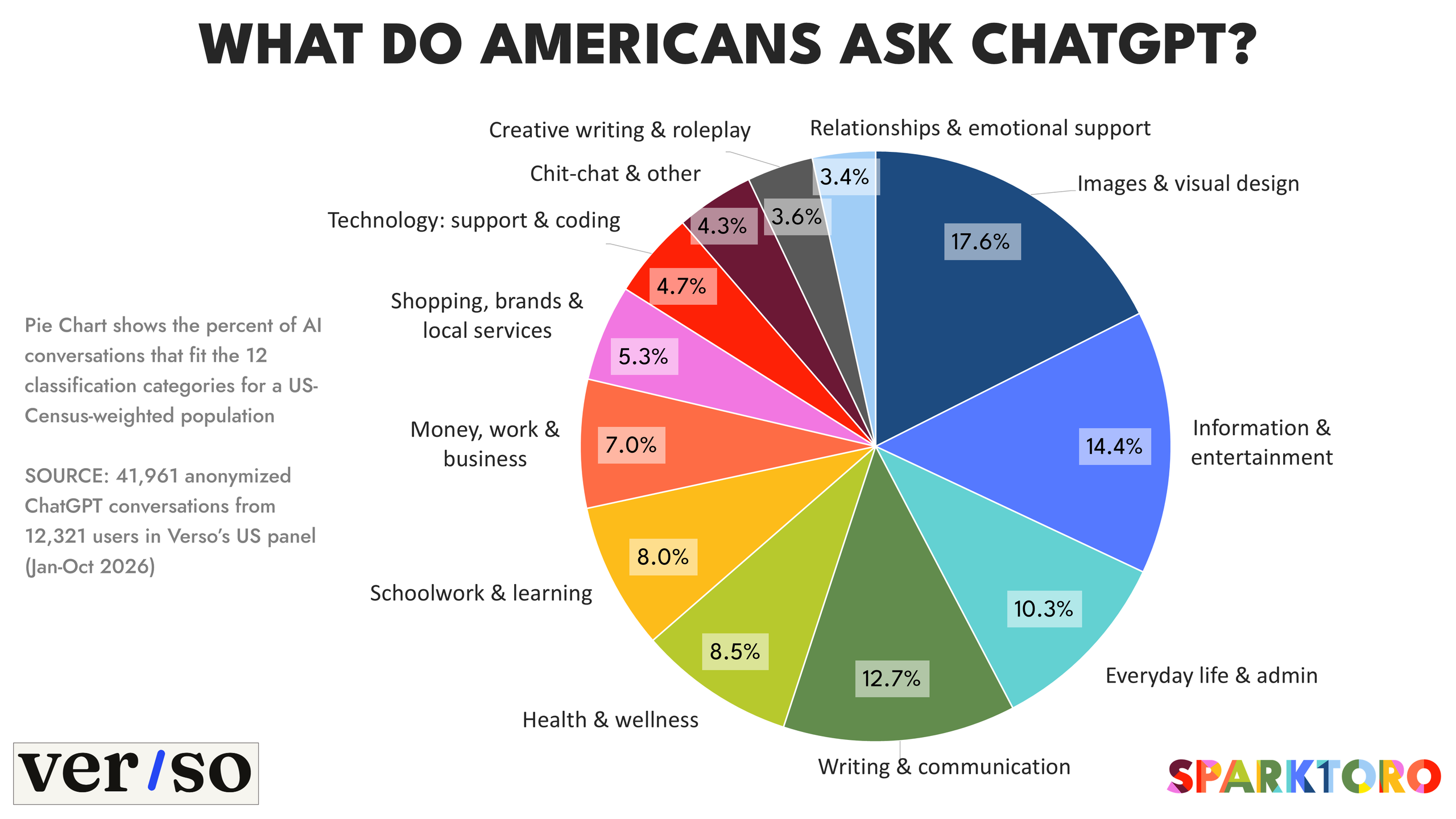
The study also classifies conversations by their main purpose. Its census-weighted chart places shopping, brands and local services at 5.3% of conversations. That measure is different from the 6.9% prompt figure; the two should not be substituted for one another.
The analysis excludes 131 especially heavy users and uses demographic weighting for a subset. Mobile use dominates the panel, while desktop, work-account and API activity are not fully represented. These limits matter when applying the findings to an individual retail audience.
What a store can do with this
The practical question is which buying decisions your customers bring to an assistant, rather than how much total AI activity exists. A specialist product may need detailed compatibility information; a gift purchase may need delivery dates, returns terms and clear comparisons.
Choose a small set of real customer questions from support and sales conversations. Check whether your product pages answer them accurately. Then measure the visits and orders you can actually observe, keeping anecdotal assistant recommendations separate from transactions.
The panel does not tell you what share of your customers will buy through AI, how much budget to move out of search, or which optimization produces incremental sales. Use it to challenge broad assumptions and design a focused test, not to extrapolate a store revenue forecast.
The source chart below uses conversation categories. Its shopping slice is broader than product checkout activity and should not be labeled a sales funnel.
More from Marketing
See all →