Google’s September spam update is complete: what to check
Google confirmed completion on 8 October. Check affected pages, markets and technical issues before attributing a store’s traffic change to the rollout.
 Will Slatton2 min read
Google’s September 2026 spam update finished on 8 October. Merchants investigating changes in organic search traffic now have a confirmed end date for the rollout, but that date alone cannot identify why an individual store gained or lost visits.
The Google Search Status Dashboard records a start on 24 September at 09:15 and an end on 8 October at 01:00, both US Pacific time. The update applied globally and across all languages.
Review the affected pages before changing the store
Google’s traffic-drop troubleshooting guide recommends comparing periods in Search Console and examining queries, pages, countries and devices. Technical problems, security issues, changing demand and reporting anomalies can also affect traffic. Check the Manual Actions report separately if you suspect a spam violation; a rollout announcement does not establish that your site received a manual action.
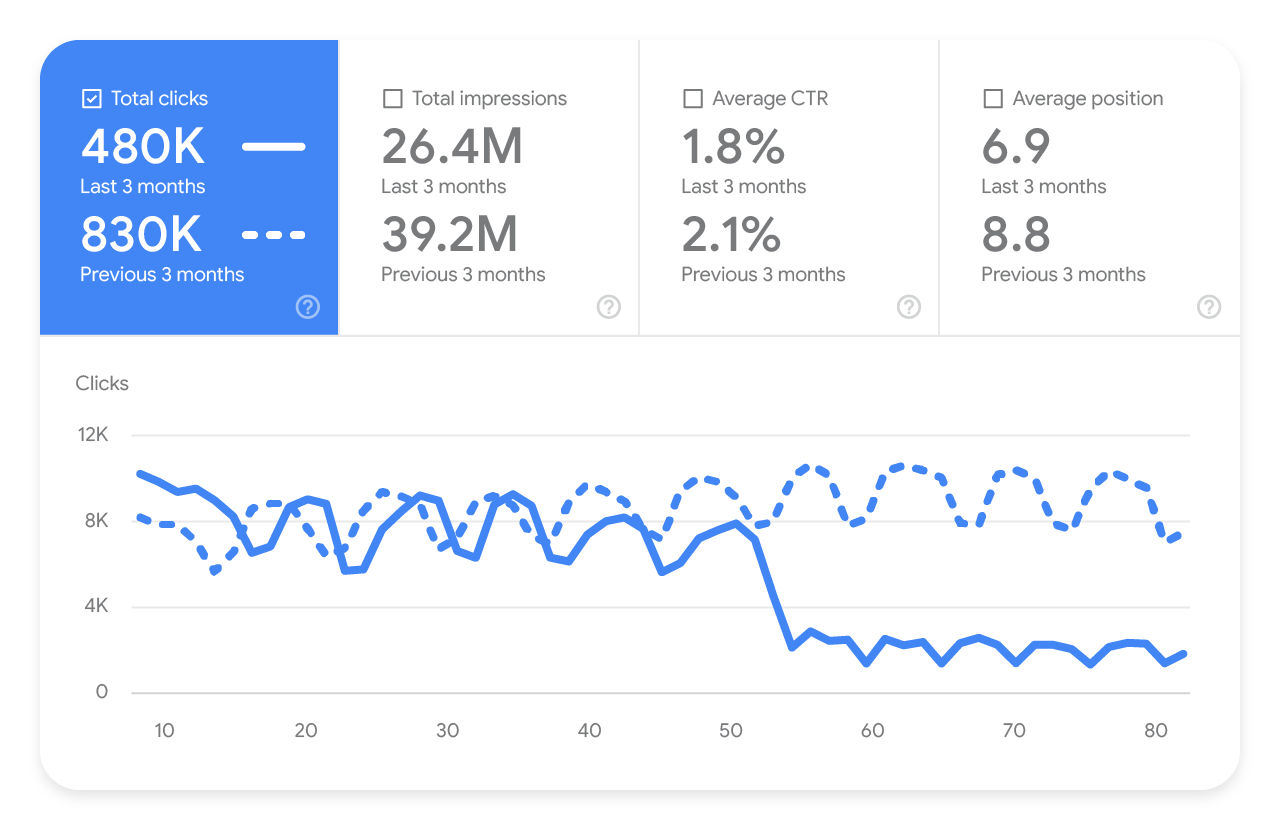
For a store, our recommendation is to separate product and collection pages from editorial content before deciding what to fix. Record promotions, URL changes and technical incidents alongside the comparison. That gives the person investigating a useful timeline rather than a single unexplained percentage.
Keep filters consistent, then look at individual markets. Our guide to Search Console’s multi-country filters explains how to compare a market group without overlooking a decline in one country.
There is no instant recovery deadline
Google’s spam-update guidance says affected sites should review its spam policies. Where a site has violated those policies, improvements may take months to be recognised by automated systems. The end of a rollout is not a promise that rankings will rebound immediately after an edit.
Keep a dated record of the issue, the evidence and the change you make. Avoid rewriting a whole store because one day’s chart moved: investigate the pattern and address the problem the evidence supports.
More from Marketing
See all →

